What Does a Solopreneur Need to Brand Their Business? The Minimalist Toolkit.
You don’t need 47 brand assets. You need the right five. Here’s exactly what makes the cut — and what to stop wasting time on.
If you’ve ever Googled “what do I need to brand my business,” you’ve seen the lists.
Logo variations. Color palettes. Typography systems. Brand guidelines. Business cards. Letterhead. Social media templates — plural, for every platform. Pitch decks. Media kits. One-pagers. Style guides.
It’s exhausting just reading it.
And if you’re a solopreneur trying to actually run a business — not build a Fortune 500 brand identity system — following that advice leaves you with a folder full of assets you never use and a website you’re still embarrassed to share.
Here’s the truth: a strong brand doesn’t require dozens of assets. It requires the right ones. Done well. Used consistently.
That’s what a minimalist brand toolkit is — and it’s what this post is going to give you.
Why Most Branding Advice Misses the Mark for Solopreneurs
Most branding advice is written for agencies, marketing departments, and businesses with teams dedicated to brand management.
It’s not written for the solopreneur who is:
Wearing every hat in the business
Working with a real budget and real time constraints
Trying to look professional without spending 40 hours on brand assets
So when you follow that advice, here’s what actually happens:
Assets you never use. You spent hours building a media kit no one has asked for.
Templates too complex to touch. You bought the 50-slide bundle and it’s been sitting untouched ever since.
Inconsistency across platforms. Your Instagram, your website, and your email signature all look like they belong to different businesses.
Wasted time. You’re designing things that don’t move the needle instead of doing the work that does.
What you actually need is a minimalist brand toolkit: a small, intentional set of assets that cover the essentials and work together without requiring a design degree to maintain.
The Five Brand Assets Solopreneurs Actually Need
1. A Website That Converts
This is your digital handshake — and the single most important asset in your brand toolkit.
Not ten pages. Not a complex navigation. One clear, focused home base that answers three questions the moment someone arrives:
Who do you help?
What changes when they work with you?
What should they do next?
Every marketing effort — your Pinterest pins, your email newsletter, your word-of-mouth referrals — eventually points somewhere. That somewhere is your website. It needs to be ready.
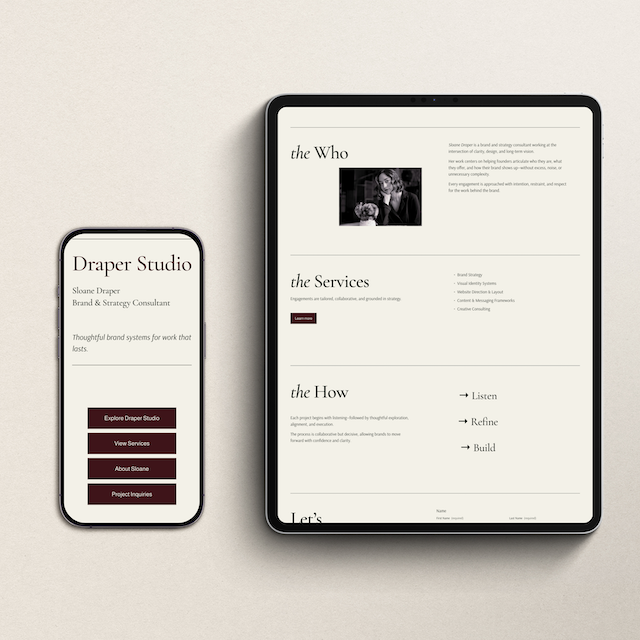
If your website isn’t saying what you need it to say, the Refined + Golden Squarespace website templates were built for exactly this. Professional, polished, and customizable without a developer.
2. A Link-in-Bio Page That Guides
Your link-in-bio page is the hub that makes every social platform work harder. It’s where people land when they find you on Pinterest or Instagram and want to take a next step.
A good link-in-bio page does three things:
Prioritizes one primary action above everything else
Offers 1–2 supporting links for different types of visitors
Feels clean, fast, and easy to navigate
Social media bios give you one link. This page makes that one link do the work of five.
3. A Client Welcome Guide
The moment a client says yes is the most important moment in your client relationship. What you send them next sets the tone for everything that follows.
A well-designed Welcome Guide tells your new client exactly what to expect, how to communicate with you, and what comes next — before they have to ask. It signals immediately that they made the right decision.
It’s not a nice-to-have. It’s the difference between a client who feels confident and one who feels uncertain.
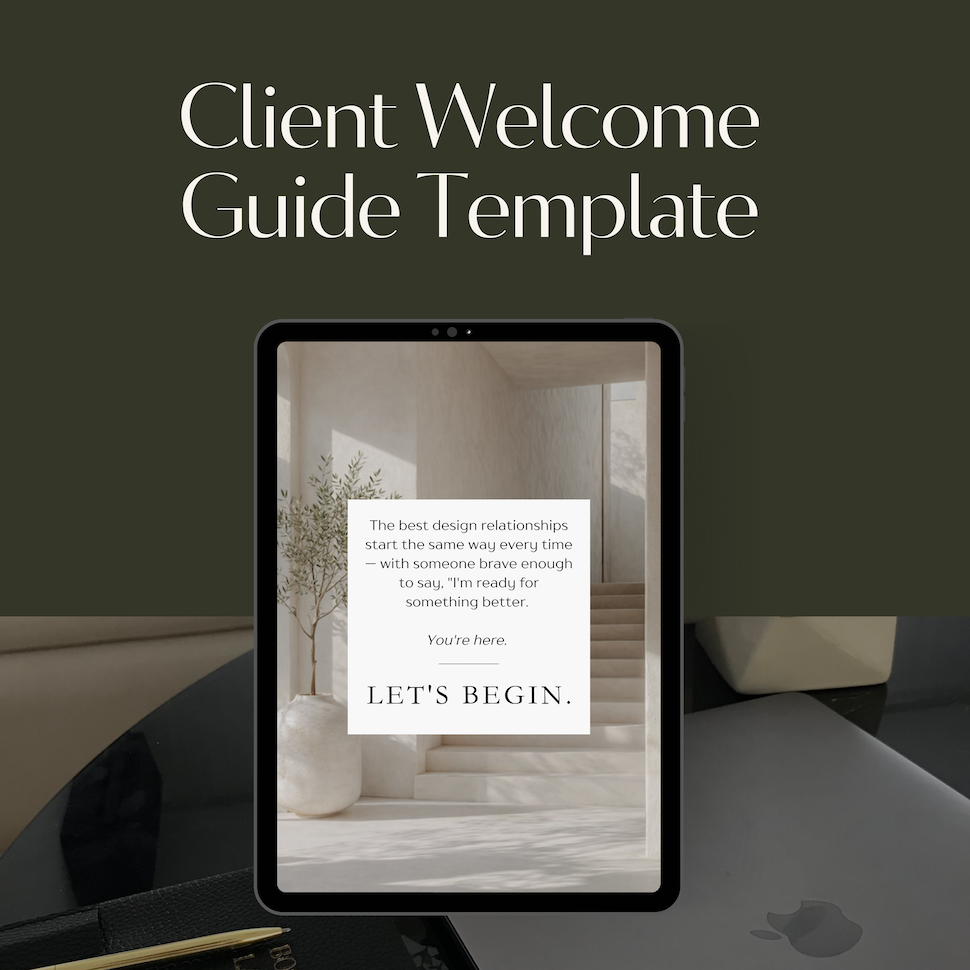
The Refined + Golden Client Welcome Guide template is built in Canva and designed to make your onboarding feel as polished as your actual work. Customizable in an afternoon.
4. 3–5 Core Content Templates
Not fifty. Not a template for every conceivable scenario. Just the formats you actually use on a regular basis — whether that’s a proposal layout, a presentation deck, a lead magnet, or a set of email headers.
The right templates feel calm to open. They don’t require a redesign every time you need to create something. They just work.
5. Consistent Visual Identity Across Everything
This isn’t a separate asset — it’s the thread that ties the four above together. Your fonts, your colors, your tone. Used consistently across your website, your welcome guide, your templates, your social profiles.
Good design is invisible. It just works. You shouldn’t be second-guessing color choices every time you sit down to create something. You should have a system that makes consistency the path of least resistance.
What You Don’t Need (At Least Not Yet)
Let’s name what you can safely leave off the list:
❌ A 40-page brand guidelines document. Unless you’re managing a team, you don’t need this.
❌ A media kit. If you’re not actively pitching press or podcasts, it can wait.
❌ 50+ social media templates. You need 3–5 layouts you’ll actually use, not a bundle you’ll never open.
❌ Every design trend that comes through your feed. Your brand needs to feel consistent and professional. That’s it.
Start with the essentials. Add more only when you genuinely need them.
Quick Audit: Do You Have the Essentials?
Run through these four questions:
✅ Does my website immediately tell a stranger who I help and what to do next?
✅ Is my link-in-bio page guiding visitors toward one clear action?
✅ Does my client onboarding experience feel as polished as my actual work?
✅ Does my brand feel cohesive across my website, my templates, and my client materials?
If you answered no to any of these, you don’t need more brand assets. You need to go deeper on the essentials first.
Ready to Build a Brand Toolkit You’ll Actually Use?
A minimalist brand toolkit isn’t about doing less. It’s about doing the right things — and doing them well enough that everything feels cohesive without requiring constant maintenance.
Here’s where to start:
Browse the Refined + Golden template shop for Canva website templates and client experience tools designed specifically for service providers.
Explore custom web design services if your current website isn’t working as hard as you are.
Download the free Brand Clarity Guide — it’s the foundation I use with every client, and it’s the clearest first step toward a brand that feels like you.
You’ve already built something worth showing up for. Let’s make sure your brand reflects that.
