How to Create Your First Lead Magnet as a Solopreneur (Without Overthinking It)
It doesn’t need to be perfect. It doesn’t need to be long. It needs to be useful — and done.
Here’s what most solopreneurs do when they decide it’s time to create a lead magnet:
They Google it.
They find articles telling them to build a 30-page ebook, a 5-day email challenge, a mini-course with video modules, or a comprehensive workbook with bonus resources. So they think: I need to create something big. Something that really wows people.
And then one of two things happens. They spend months building something massive — and when they finally launch it, crickets. Or they get so overwhelmed by the scope that they never finish at all. The half-built lead magnet sits in drafts, and they still don’t have an email list.
Here’s what I want you to know: your first lead magnet doesn’t need to be perfect. It needs to be useful and easy to consume. A simple one-pager often converts better than a 30-page guide. Let me show you how to build yours without overthinking it.
What a Lead Magnet Actually Is (And What It’s Not)
A lead magnet is a free resource you offer in exchange for someone’s email address. That’s the whole definition.
It’s not a mini-course. It’s not a masterclass. It’s not a book-length guide. It’s a small, specific piece of value that solves one problem for your ideal client.
A good lead magnet is:
Hyper-specific — it solves ONE clear problem
Quick to consume — 10 minutes or less
Immediately actionable — they can use it right away
Relevant to your paid offer — it naturally leads toward your services or shop
A lead magnet is not:
A teaser for your paid offer that doesn’t actually deliver value on its own
A giant resource that takes hours to consume
A recycled blog post with nothing new
Something you made because “everyone says you need one” but doesn’t connect to your actual business
The goal isn’t to give away everything you know. The goal is to solve one specific problem so well that they trust you to help with bigger ones.
Why Simple Lead Magnets Win
I know what you’re thinking: won’t a simple checklist feel cheap? Won’t people expect more?
No. Here’s why.
People are overwhelmed. Your audience doesn’t want homework. They want a quick win. A one-page checklist they can use today is more valuable than a 50-page workbook they’ll save and never open.
Simple lead magnets are easier to say yes to. When someone sees “Download the 10-point checklist,” they know exactly what they’re getting. It’s low commitment. Easy decision. “Download the ultimate 47-page guide” makes people think: I don’t have time for that right now.
You can launch it this week. A simple lead magnet means you stop waiting and start building. The faster you launch, the faster you learn what your audience actually responds to.
Done is better than perfect. Your first lead magnet doesn’t have to be your forever lead magnet. Launch something simple. See how it performs. Refine from there.
The 3 Lead Magnet Formats That Work for Solopreneurs
You don’t need to reinvent the wheel. These three formats work consistently well:
1. Checklist or Quick-Start Guide (1–2 pages)
The simplest option — and often the most effective. Checklists are scannable, actionable, and easy to consume. They give your reader clarity and a clear path forward without asking much of them.
Examples:
“The 5-Minute Website Audit Checklist”
“10 Things to Do Before Launching Your Service”
“The New Solopreneur’s Brand Clarity Checklist”
2. Template or Swipe File
Give people a done-for-you starting point. Instead of staring at a blank page, they have a framework to customize. That’s instant, practical value.
Examples:
“5 Email Templates for Following Up with Leads”
“The Discovery Call Script Template”
“Social Media Caption Swipe File for Service Providers”
3. Resource List or Cheat Sheet
Curate and organize information your audience is already Googling. You do the research for them, save them decision fatigue, and position yourself as the go-to resource in your niche.
Examples:
“15 Tools Every Solopreneur Should Know About”
“The Free Stock Photo Sites I Actually Use”
“Affordable Canva Alternatives Worth Trying”
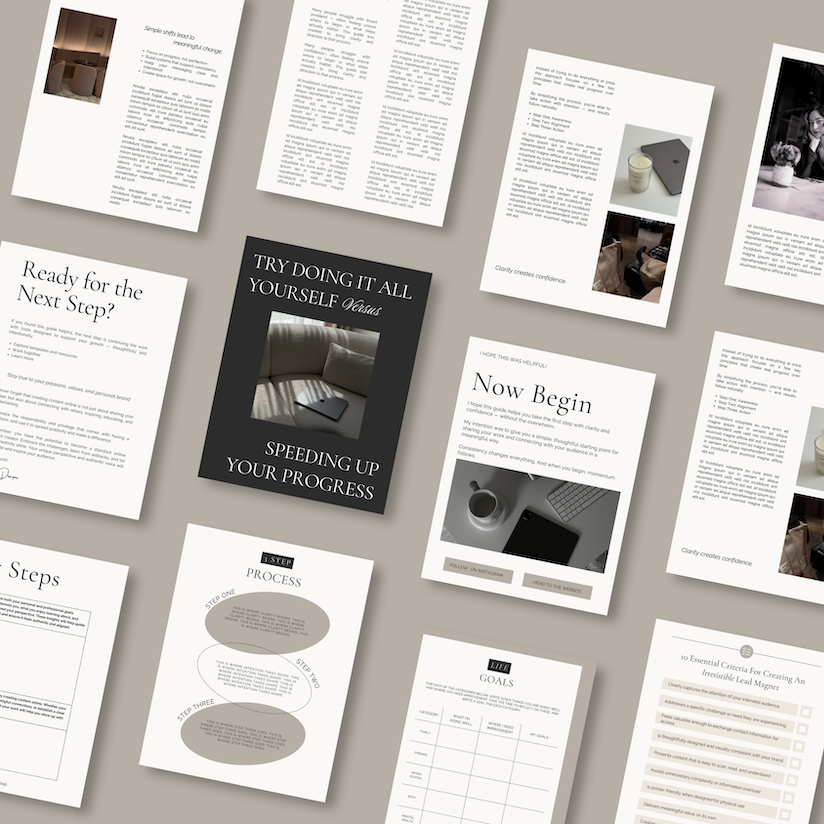
If you’re stuck on the design piece, this is exactly why lead magnet templates exist — so you can focus on the content, not wrestle with Canva layouts for three hours.
The Refined + Golden templates are pre-built, professional, and ready to customize.
How to Choose Your Topic Without Overthinking It
Here’s the simplest way to pick: answer one specific question your audience keeps asking.
Think about what people ask you in DMs or emails. What problem comes up on every discovery call? What’s the first roadblock someone hits before they’re ready to work with you? Your lead magnet should solve that problem.
A useful formula:
“How to [solve specific problem] in [short timeframe] without [common obstacle]”
Examples:
“How to Write Your About Page in 20 Minutes Without Sounding Salesy”
“How to Choose Your Brand Colors in 10 Minutes Without a Design Degree”
“How to Audit Your Website in 5 Minutes Without Fancy Analytics”
Keep it narrow. Keep it specific. Keep it actionable.
The Simplest Setup for Delivering Your Lead Magnet
Once your lead magnet is created, you need a way to get it to people. You don’t need a fancy funnel or a complex landing page builder. Here’s the minimum viable setup:
Step 1: Upload your PDF to your email platform (Flodesk, ConvertKit, Mailchimp) or Google Drive with link sharing on.
Step 2: Create a simple signup form with just a name (optional) and email address. One sentence describing what they’re getting.
Step 3: Write the delivery email. It goes out automatically the moment someone subscribes. Thank them, include the link, and set a quick expectation about what’s coming next.
That’s the whole system. Launch that first.
What to Do After Someone Downloads It
Here’s where most people drop the ball: someone downloads the lead magnet and then hears nothing. Don’t let new subscribers go cold.
You don’t need a 20-email nurture sequence. You just need to stay in touch:
2–3 days later: Check in. Did they find it helpful? Offer to answer questions.
1 week later: Share a related tip, story, or resource. Keep the conversation warm.
2 weeks later: Introduce your paid offer — the natural next step after your lead magnet.
The lead magnet is the beginning of the relationship. The follow-up is where trust is actually built.
Five Lead Magnet Mistakes to Avoid
Making it too broad. “The Ultimate Guide to Starting a Business” is overwhelming. “The 5-Minute Business Name Checklist” is specific.
Making it too long. If it takes an hour to consume, most people won’t finish it. Keep it short and actionable.
Making it unrelated to your offer. If you sell web design services, your lead magnet should connect to websites, branding, or client experience — not a completely different topic.
Overthinking the design. A clean, simple PDF is better than a “perfect” design that takes three months to finish.
Forgetting to follow up. The lead magnet is the start of the relationship. Don’t ghost your new subscribers.
Quick Launch Checklist: Is Yours Ready?
Before you hit publish, run through these:
Does it solve one specific problem?
Can someone consume it in under 10 minutes?
Is it immediately actionable?
Does it naturally lead toward my paid offer?
Is the signup process simple — one form, one delivery email?
Do I have a simple 3-email follow-up plan?
If you answered yes to all six — launch it. Today.

The Refined + Golden Lead Magnet Canva templates are designed to help you get your first (or next) lead magnet out the door in under an hour.
Simple layouts, professional look, easy to customize. Stop designing from scratch and start building your list.
Stop Waiting for Perfect. Start Building Your List.
Your first lead magnet is a learning tool. It’s how you find out what your audience actually wants, what messaging resonates, and what problems are worth solving. You’ll probably create a version 2. That’s the whole point.
But you can’t improve something that doesn’t exist yet.
Pick a format. Answer one question. Design it simply. Launch it this week.
Here’s where to start:
Browse the Refined + Golden template shop — Canva lead magnet templates and website templates designed for service providers.
Explore custom web design services — if you need a proper landing page or full website to host your lead magnet on.
Download the free Brand Clarity Guide — the best lead magnets start with knowing exactly who you help and what you stand for. This guide is where that clarity begins.
Your email list is the most valuable thing you’ll build in your business. It starts with one simple resource and one honest offer. You have both of those already.
