The Tools You Actually Need to Start a Solopreneur Business (And What to Skip)
Part 2 of 5 in the Solopreneur Starter Series — a practical guide to building your business from scratch.
You don’t need twelve tools. You need four categories covered.
If you’ve spent any time in online business spaces, you’ve probably seen the lists. The ultimate solopreneur tech stack. The tools every entrepreneur needs in 2025. Twenty-seven apps to run your business like a pro.
Most of it is noise.
The truth is, you can start a business — a real, professional, client-ready business — with a handful of simple tools. The goal at the beginning isn’t to build the perfect system. It’s to get moving without getting buried.
So here’s the honest breakdown: what you actually need, what you can skip for now, and why keeping it simple isn’t a workaround — it’s the strategy.
The Four Categories You Need Covered
Every solopreneur business, regardless of industry, needs to solve four basic problems: where people find you, how you communicate with them, how they pay you, and how you manage the work. That’s it. Everything else is optional until you’re ready for it.
01. Your Website
You need one. Not a perfect one — a functional one.
Your website is the one place online that you own and control. It’s where people go to decide if they want to hire you or buy from you, and it’s the only digital real estate that isn’t subject to an algorithm’s mood on any given Tuesday.
For solopreneurs, Squarespace is the platform I recommend without hesitation. It’s all-in-one — hosting, design, and basic ecommerce are included in one subscription. There’s no need to manage plugins, worry about security updates, or hire a developer to make changes. You can build a professional site yourself, and when you’re ready to hand it off, a designer can make it look exactly the way you want.
You don’t need ten pages. You need four: Home, About, Services or Shop, and Contact. Start there. You can always add more as your business grows.
02. An Email Marketing Platform
Not your personal Gmail account. A real email marketing tool.
Email is the highest-ROI channel for small businesses, consistently — and it’s the only way to reach your audience directly, without relying on social media algorithms or platform changes. Building your list from the beginning, even when it’s small, is one of the highest-leverage things you can do.
MailerLite is a solid free starting point. It’s clean, intuitive, and gives you everything you need to send newsletters and set up basic automations without paying a thing until you’re ready to scale. When you’re ready to grow, it grows with you.
You don’t need to send weekly emails or build a massive funnel right away. Start with a simple monthly newsletter. Show up consistently. That’s the whole strategy at this stage.
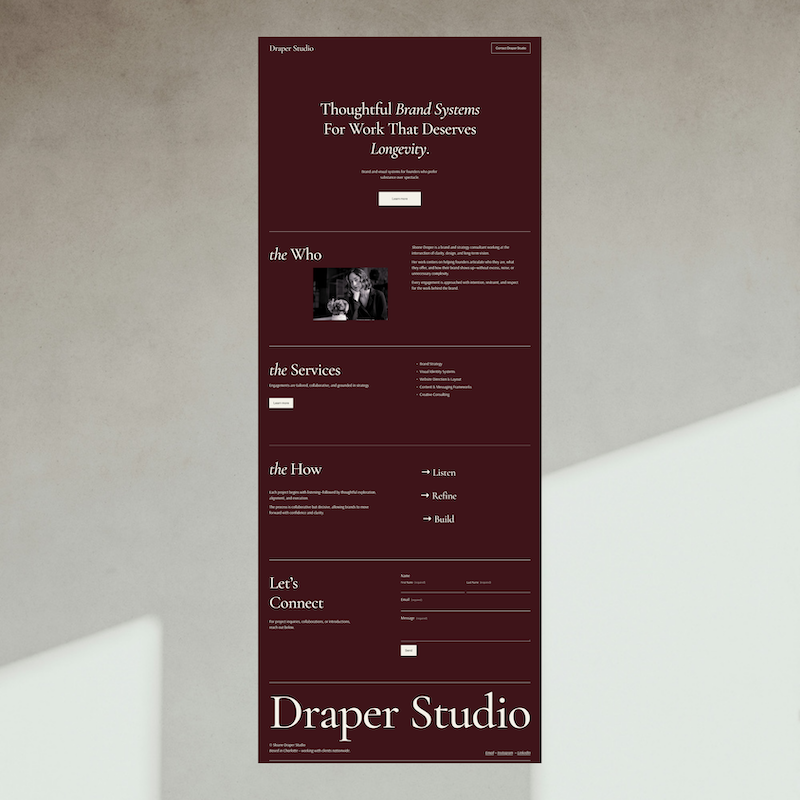
Ready to Start Building Your Website?
If you want a professional Squarespace site without starting from a blank page, the Minimalist One-Page Template is designed for solopreneurs who want a clean, polished online presence without the overwhelm.
03. A Way to Get Paid
Here’s the part most people skip: you do not need a website, a logo, or a business name to find out if your idea has legs.
Before you invest time or money into building anything, talk to people. Tell someone in your target audience what you’re thinking and ask them what they think. See if anyone would actually pay for it. Pay attention to the questions they ask and the problems they mention.
A few conversations can tell you more than months of planning. And they’re free.
This isn’t about perfecting your pitch — it’s about listening. The people you’re trying to help will tell you exactly what they need, if you give them the chance.
04. How You Manage Bookings or Clients
How this looks depends on what you offer.
If you’re service-based and clients need to book calls or consultations, Calendly is simple, free to start, and integrates easily with most website platforms. It removes the back-and-forth of scheduling and makes the whole process feel seamless.
If your business involves ongoing client relationships, proposals, and contracts — web design, coaching, consulting — HoneyBook is worth having from the start. It replaces a stack of separate tools and makes your client experience feel polished even when you’re brand new.

Not Sure Which Tools Are Right for Your Specific Business?
A Business Clarity Session is a focused 90-minute conversation where we map out your tools, platforms, and next steps together — so you stop guessing and start building with confidence.
What to Skip for Now
Here’s the part most tool lists leave out.
You do not need a CRM, a project management platform, an advanced email automation sequence, a podcast recording setup, a membership platform, or a course hosting tool before you have your first client or customer.
Those tools solve problems you don’t have yet. And setting them up before you’ve proven your business model is one of the most effective ways to stay very busy while making very little progress.
Build the four. Get clients. Then add tools to solve problems that actually exist.
Simple is not a Limitation
The most successful solopreneurs I know didn’t start with the best tools. They started with the right ones — the ones that let them focus on delivering value instead of managing software.
A Squarespace website. An email list. A way to get paid. A way to manage what’s on your plate. That’s your tech stack. Everything else can wait.
The tools don’t build the business. You do. Start with fewer than you think you need, and add more only when the problem is real.
-
Not necessarily all at once. If you’re service-based, prioritize your website and a way to get paid first. Add your email platform as soon as you have something to say — even if that’s just a monthly check-in with your list. Booking tools come when clients start asking for them.
-
Start free. MailerLite is free up to 1,000 subscribers. Stripe takes a percentage of transactions rather than a monthly fee. You can run a lean, professional operation for very little money in the early stages.
-
Yes — selectively. AI tools can genuinely save time on writing, brainstorming, and research. But they’re support tools, not a replacement for your voice, your judgment, or your relationships. Use them to work more efficiently, not to outsource what makes your business yours.
-
That’s okay. Use what you have until it becomes a problem. If your current platform is difficult to update, expensive to maintain, or holding your design back, that’s worth revisiting. But don’t switch platforms for the sake of it — switch when the friction is real.
Ready to Take the Next Step?
With your tools in place, the next question becomes: how do you actually get someone to hire you or buy from you — especially when you’re just starting out and don’t have a big following yet?
That’s what we’re covering in Post 3 of the Solopreneur Starter Series: How to Get Your First Client or Customer Without a Big Following.
Grab the free Brand Clarity Guide — get clear on who you help, what you offer, and how to say it before you build anything else. Every tool in this post works better with that clarity in place.
Browse the template shop — done-for-you Canva templates for your brand, your client documents, and your online presence. Professional design without the professional design cost.
Get started with HoneyBook — use my referral link for a discount on your first plan and set up your client process the right way from day one.
Inquire about a custom Squarespace website — and receive 20% off your annual plan when we work together.
Join the newsletter — monthly slow-growth strategy, tool recommendations, and real notes from running a one-person web design studio. No noise, just signal.
Read the full series:
Part 1: Before You Build Anything — How to Get Clear on Your Business Idea
Part 2: The Tools You Actually Need to Start (And What to Skip) ← you are here
Part 3: How to Get Your First Client or Customer Without a Big Following
Part 4: How to Build a Squarespace Website for Your Small Business (coming soon)
Part 5: What to Do in Your First Year as a Solopreneur (coming soon)