You built the Instagram post. Wrote the caption. Added the hashtags. And at the end added your — “link in bio.”
But where does that link go? For a lot of solopreneurs, it goes to Linktree. And that’s understandable — it’s fast, it’s free, and it solves a real problem.
It’s also quietly working against you in ways that aren’t immediately obvious.
But before we get into why — let’s make sure we’re on the same page about what a link-in-bio actually is and why it matters in the first place.
FIRST: WHAT IS A LINK-IN-BIO — AND WHY DO YOU NEED ONE?
Instagram (and TikTok, and most other social platforms) only allow one clickable link on your profile. You can’t add links inside captions. So when you write “link in bio” at the end of a post, you’re pointing followers to that single link on your profile page.
The problem is that one link isn’t always enough. You might want to send people to your services page, your shop, your latest blog post, and your free guide — all at the same time.
That’s where a link-in-bio page comes in. It’s a simple landing page that lives behind your one profile link and holds multiple destinations — so followers can choose where to go next.
Think of it as a lightweight home base between your Instagram profile and the rest of your business online.
A link-in-bio page typically includes:
A short headline or tagline that reminds visitors who you are
2–5 links to your most important pages — services, shop, blog, freebie, booking
Your photo or brand visual so it feels like you, not a generic directory
Optionally: an email opt-in to capture leads directly from Instagram traffic
Tools like Linktree became popular because they make this fast and free. But as your business grows, where that page lives — and what it’s built on — starts to matter quite a bit.
Here’s why.
1. LINKTREE LINKS DON’T BUILD YOUR SEO
Every time someone clicks your Instagram bio link and lands on Linktree, that traffic stays on Linktree’s domain — not yours.
From a search engine’s perspective, Linktree is getting the signal that people are finding it useful. Your site gets nothing. No authority. No visit data. No indication that real humans clicked through and engaged.
When that link lives on your own domain — even a simple one-page landing — every click contributes to your site’s credibility over time. That compounds. Linktree traffic doesn’t.
For solopreneurs building long-term organic visibility, this matters more than it might seem in the short term.
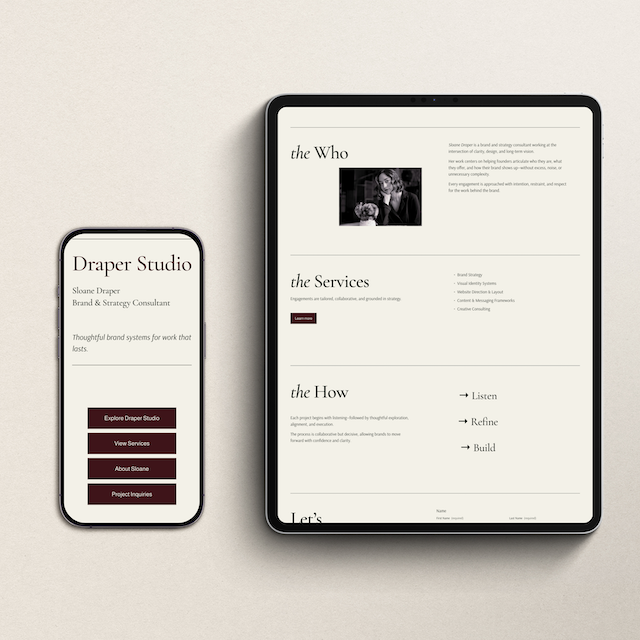
Make it stand out
Whatever it is, the way you tell your story online can make all the difference.
2. GENERIC PAGES DON’T BUILD TRUST
Linktree pages look like Linktree pages. They’re recognizable — and not in a way that benefits your brand.
When someone clicks your bio link and lands on a page that looks like everyone else’s bio link page, it communicates something about how seriously you take your online presence. That’s not a judgment — it’s just how first impressions work.
Your own landing page — with your colors, your fonts, your voice, your photo, and your offer — communicates something completely different. It says: this person has a real business, and they’ve thought carefully about how it looks.
That’s the kind of impression that turns a casual Instagram follower into an actual inquiry.
3. YOU DON’T OWN THE DATA
When your traffic runs through a third-party tool, the analytics stay there too. You can see how many people clicked — but you can’t see what they did after, how long they stayed, what they were interested in, or whether they came back.
When that page lives on your site, you get all of it. Which links get the most clicks. Where people go next. How your Instagram audience behaves differently from your email list or your Pinterest visitors.
That information shapes smarter decisions — about your offers, your content, your CTAs. You can’t make those decisions with data you don’t have access to.
4. YOU’RE SENDING PEOPLE AWAY BEFORE THEY ARRIVE
This is the one that doesn’t get talked about enough.
The moment someone clicks your bio link and lands on a third-party page, they’ve left your ecosystem. They’re on someone else’s domain. Any cookies, any retargeting, any tracking you have set up on your site — none of it fires.
More importantly: trust is built on your domain. Your portfolio lives there. Your testimonials live there. Your booking page lives there. Sending someone to Linktree first means they have to take one more step to get to any of that.
Some of them won’t take it.
WHAT TO DO INSTEAD
You don’t need a full website overhaul to fix this. You need one well-built page on your own domain that does what a Linktree page does — but better.
A good link-in-bio page on your site should include:
A short, clear headline that says who you are and what you offer
Two to four links to your most important pages or offers
A lead magnet or freebie to capture email addresses
Your brand colors, fonts, and photo — so it feels intentional, not assembled
A simple footer with your contact info or social links
That’s it. One page. On your domain. Doing quiet, consistent work every time someone finds you on Instagram.
The difference isn’t dramatic. It’s incremental — which is exactly how sustainable growth works.
Start with the Free Brand Clarity Guide
Before you build anything — even a one-pager — get clear on who you help and what you offer.The Brand Clarity Starter Guide walks you through it step by step.
-
A link-in-bio page is a simple landing page that lives behind the single clickable link on your Instagram (or TikTok) profile. Because social platforms only allow one link on your profile, a link-in-bio page acts as a lightweight hub where followers can choose where to go next — your services page, your shop, your blog, your freebie, or your booking page. It’s the bridge between your social media presence and the rest of your business online.
-
Yes — and that’s exactly the point. Your link-in-bio page should be a page on your own website, not a third-party tool like Linktree. When it lives on your domain, every click builds your SEO, your analytics stay in one place, and visitors land somewhere that reflects your brand rather than a generic template. Your main website homepage often has too much going on to serve as an effective bio link destination — a dedicated one-page version gives you something clean, focused, and purpose-built for Instagram traffic.
-
Yes — Squarespace is one of the best website platforms for solopreneurs because it requires no coding knowledge, includes built-in e-commerce and blogging tools, and produces professional-looking results without a large budget or technical team. It’s especially strong for service providers, coaches, consultants, and creatives who want a beautiful site they can actually manage themselves.
-
A Canva template gives you a professionally designed starting point you can customize yourself — ideal if you’re early-stage or working with a limited budget. A custom web design project means a designer builds everything for you with your specific brand, audience, and goals in mind. Many solopreneurs start with templates and upgrade to a full custom site as their business grows.
-
The most effective lead generation websites for solopreneurs do three things: clearly explain what you do and who you help in the first 5 seconds, offer a free resource (like a guide or checklist) to capture email addresses, and include multiple clear calls-to-action throughout the page. Pair this with consistent SEO-optimized blog content and a Pinterest strategy and you’ll build sustainable organic traffic without relying on paid ads.
READY TO RECLAIM YOUR TRAFFIC?
Switching from Linktree to your own page is one of the simplest, highest-leverage moves you can make for your online presence. Here’s where to start:
Shop the One-Page Website + Link-in-Bio Template — professionally designed, fully customizable in Canva, and built to replace your Linktree the right way.
Grab the free Brand Clarity Guide — get clear on your message before you build anything, so your page actually converts.
Inquire about custom web design — if you’re ready for a full site that works as hard as you do, let’s talk about what that looks like.
Your Instagram is already doing the work of getting people’s attention. Make sure the next step they take lands them somewhere that’s actually yours.