For the solopreneur who is exhausted by the content treadmill — and ready for something different.
If you’ve spent any time in the online business world, you’ve probably absorbed this idea: to grow, you need to show up every day. Post consistently. Stay visible. Keep the algorithm happy.
And for a while, maybe you tried. You made the posts, wrote the captions, batched the content. You showed up — and it still felt like running on a treadmill that never slowed down.
Here’s what I want you to know: that model is not the only one.
At Refined + Golden, I’ve built my business around a different approach — one I call Quiet Marketing. It’s not passive, and it’s not effortless. But it is sustainable, intentional, and designed to work alongside your life instead of consuming it.
Pillar One: Pinterest as a Search Engine, Not a Social Platform
Most people treat Pinterest like Instagram — a place to post and hope someone notices. But Pinterest is fundamentally different: it’s a search engine. And that changes everything about how it works for your business.
When you create a pin with a clear, keyword-rich description, that content doesn’t disappear in 24 hours. It circulates. It surfaces in search results. It drives traffic to your website months — sometimes years — after you posted it.
For Refined + Golden, Pinterest is the primary traffic driver because:
Pins compound over time without ongoing effort
My ideal clients — solopreneurs and mompreneurs — use it actively to research and plan
It rewards quality and relevance, not volume or virality
Every pin points back to my website, blog, or shop
The goal isn’t to go viral. The goal is to be consistently findable by exactly the right people, over a long period of time.
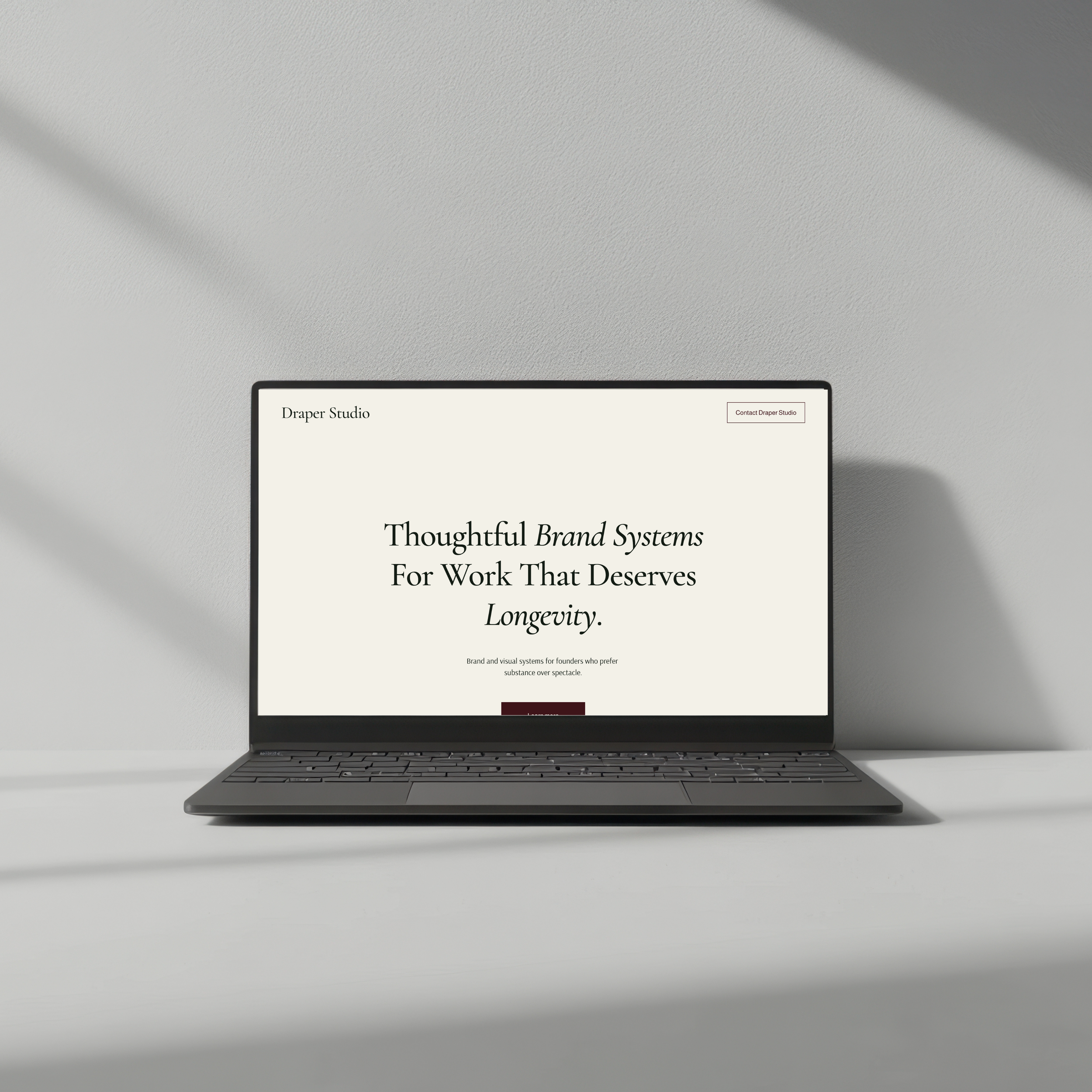
If Pinterest is sending people to your site, your site needs to be ready for them.
The Refined + Golden template shop has Squarespace website templates designed for service providers who want a polished, professional presence — without the overwhelm.
Pillar Two: A Blog That Works While You’re Offline
Every blog post I write is an answer to a real question my clients are already Googling. Not a trend piece. Not a hot take. A useful, honest response to something someone is sitting with right now.
That approach means my blog isn’t just content — it’s infrastructure. Each post becomes a Google-discoverable resource, a Pinterest pin destination, and a piece of email content, all at once.
A well-written blog post can:
Rank in search results for months or years
Drive warm, already-interested traffic directly to your services or shop
Establish you as the go-to resource in your niche
Double as newsletter content, reducing your total workload
You don’t need to post every week. Consistency matters more than frequency. Two thoughtful, well-optimized posts a month will outperform eight rushed ones every time.
Pillar Three: One Email a Month, Done Intentionally
I send one newsletter a month — every second Friday. That’s it. No weekly blasts, no promotional sequences, no urgency-driven subject lines.
Just one intentional email that offers something genuinely useful — a tip, a resource, a behind-the-scenes look — with a soft, natural mention of whatever I’m currently offering.
The result? My list actually opens my emails. And every month, someone replies who was “just thinking about reaching out.” Because they didn’t feel bombarded — they felt remembered.
Your email list is the only audience you actually own. Not your follower count, not your Pinterest reach — your list. And showing up for it consistently (even just once a month) builds more trust than daily social posts ever could.
The Part No One Talks About: Stepping Off the Content Treadmill
There’s a quieter benefit to this approach that I think deserves more airtime: it’s genuinely better for your mental health.
The pressure to produce content daily — to be witty, relevant, visible, and strategic all at once, every single day — is an enormous cognitive load. For solopreneurs and mompreneurs who are already holding a lot, it can tip the balance from manageable to overwhelming.
When you shift to a Quiet Marketing approach, something changes. You stop measuring your business’s health by how many posts you published this week. You stop feeling like you’re failing every day you don’t “show up.”
You start trusting that your work is out there, doing its job, even when you’re not watching.
That shift — from performance to infrastructure — is one of the most meaningful things I’ve experienced in building this business. And I believe it’s available to you too.

This is exactly why I created the Refined + Golden template collection — so the infrastructure of your business looks as good as the work you do inside it.
No overwhelm. Just the tools you’ll actually use, designed to work quietly and beautifully in the background.
Ready to Build Something That Works While You Rest?
Quiet Marketing isn’t a shortcut. It’s a long game — built on intentional content, a website that converts, and a simple email strategy that keeps your name in the right inboxes.
If you’re a service provider who is ready to step off the treadmill and build something sustainable, here are a few places to start:
Browse the Refined + Golden template shop — Canva website templates and client experience tools designed for service providers who want a polished presence without the overwhelm.
Explore custom web design services — if your website isn’t working as hard as you are, let’s change that.
Grab the free Brand Clarity Guide — it’s my starting point for every client project, and it’s yours to keep. Download it and you’ll also receive the Refined + Golden newsletter: once a month, the second Friday, practical tips for growing a service business quietly and well.
You’ve built something worth growing. Let’s make sure your marketing reflects that.
-
The most effective lead generation websites for solopreneurs do three things: clearly explain what you do and who you help in the first 5 seconds, offer a free resource (like a guide or checklist) to capture email addresses, and include multiple clear calls-to-action throughout the page. Pair this with consistent SEO-optimized blog content and a Pinterest strategy and you'll build sustainable organic traffic without relying on paid ads.
