Some days, the hardest part of running a business isn’t the work itself. It’s the low-grade exhaustion of making a hundred small decisions before you ever sit down to do anything.
Which page needs updating first. What to write, when to write it, whether it’s even worth it. How to explain your services — again — in a way that actually makes sense.
That’s decision fatigue. And for solopreneurs, it’s sneaky. It doesn’t announce itself. It just quietly drains you until a task that should take twenty minutes feels impossibly heavy.
The good news: most of it comes down to systems. And systems are fixable.
WHERE DECISION FATIGUE HIDES IN YOUR BUSINESS
It rarely shows up all at once. It accumulates in the gaps — in the moments where a decision should already be made but isn’t. Here are the three places it tends to quietly cost you the most.
1. YOUR WEBSITE
If your site doesn’t clearly tell visitors what to do next, you’re making that decision for them in real time — on every visit, for every person who lands on your page.
A homepage that’s unclear about your offer. A navigation with too many options. A contact page buried three clicks deep. These aren’t just design problems — they’re decision problems. And they cost you inquiries.
A clear homepage, one strong call-to-action, and a simple structure removes that friction for both of you. Your visitor knows exactly where to go. You stop second-guessing whether your site is doing its job.
Not Sure What Your Site Should Say?
The free Brand Clarity Starter Guide walks you through a simple framework to clarify who you help, what you offer, and how to say it — before you build anything.
2. YOUR CONTENT
When you sit down to write a post or send an email without a plan, your brain has to build the whole thing from scratch. Topic, angle, format, length, CTA — every blank document is a blank decision.
That’s exhausting. Not because writing is hard, but because the decision-making that comes before writing is.
A simple content framework — even just a monthly theme or a consistent post structure — makes most of those decisions before you ever open the document. The work becomes execution, not invention. That’s a very different kind of effort.
3. YOUR CLIENT PROCESS
Every time you re-explain your packages from memory, re-send your onboarding steps, or recreate a welcome document you’ve written three times before — that’s a system gap showing up as wasted energy.
Templates and repeatable workflows don’t make your business feel generic. They make it feel professional. And they give you back the mental bandwidth to focus on the work that actually requires your creativity.
The goal isn’t to automate everything. It’s to make the repeatable things repeatable so the meaningful things get your full attention.
SIMPLIFYING IS NOT DOING LESS
It’s building a foundation where the decisions are already made — so you can just do the work.
You don’t need a complete overhaul. You need to identify the two or three places where you’re making the same decision over and over, and close that loop. Start there.
A clearer website. A simple content plan. One fewer thing to recreate from scratch. That’s what quiet momentum actually looks like.
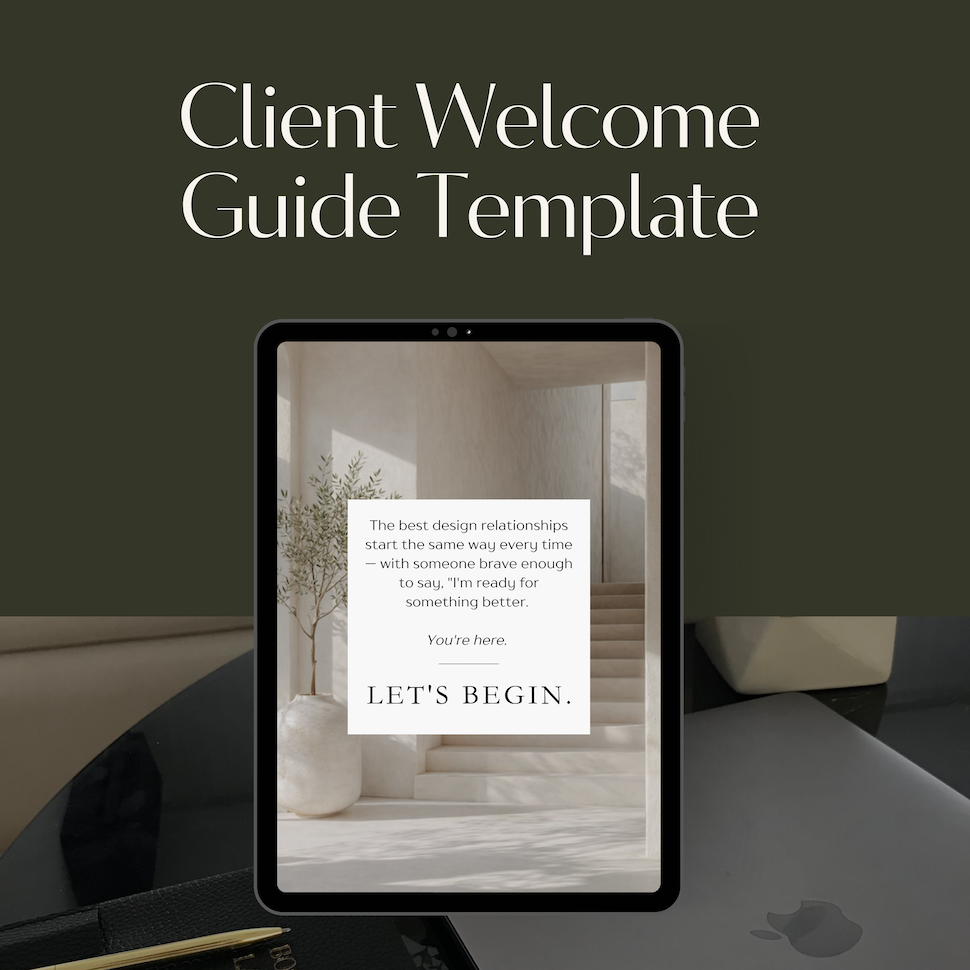
Ready-Made Templates for Your Business
Done-for-you Canva templates for your brand, client-facing documents, and online presence.So you’re not starting from scratch — every single time.
FAQS
-
Yes — Squarespace is one of the best website platforms for solopreneurs because it requires no coding knowledge, includes built-in e-commerce and blogging tools, and produces professional-looking results without a large budget or technical team. It’s especially strong for service providers, coaches, consultants, and creatives who want a beautiful site they can actually manage themselves.
-
A Squarespace or Canva template gives you a professionally designed starting point you can customize yourself — ideal if you’re early-stage or working with a limited budget. A custom web design project means a designer builds everything for you with your specific brand, audience, and goals in mind. Many solopreneurs start with templates and upgrade to a full custom site as their business grows.
-
The most effective lead generation websites for solopreneurs do three things: clearly explain what you do and who you help in the first 5 seconds, offer a free resource (like a guide or checklist) to capture email addresses, and include multiple clear calls-to-action throughout the page. Pair this with consistent SEO-optimized blog content and a Pinterest strategy and you’ll build sustainable organic traffic without relying on paid ads.
READY TO SIMPLIFY? HERE’S WHERE TO START.
Knowing where the drain is coming from is the first step. What you do next is what changes things.
Here’s where to go from here:
Browse the template shop— done-for-you Canva templates for your brand, client documents, and online presence, so you’re not rebuilding from scratch every time.
Grab the free Brand Clarity Guide — a simple framework to get clear on who you help and what you offer before you build or update anything.
Inquire about web design — if your website is the biggest source of friction in your business, let’s build something that works quietly in the background so you don’t have to think about it.
Join the newsletter — monthly slow-growth strategy, practical systems tips, and behind-the-scenes updates. No noise, no pressure.
However you’re feeling right now — behind, overwhelmed, or just ready for things to feel easier — the next right step is simpler than it looks. Start with one thing.
